Inside the Athena Beauty Campaign: How We Hit 4.2 ROAS and 170% Engagement Lift in 60 Days
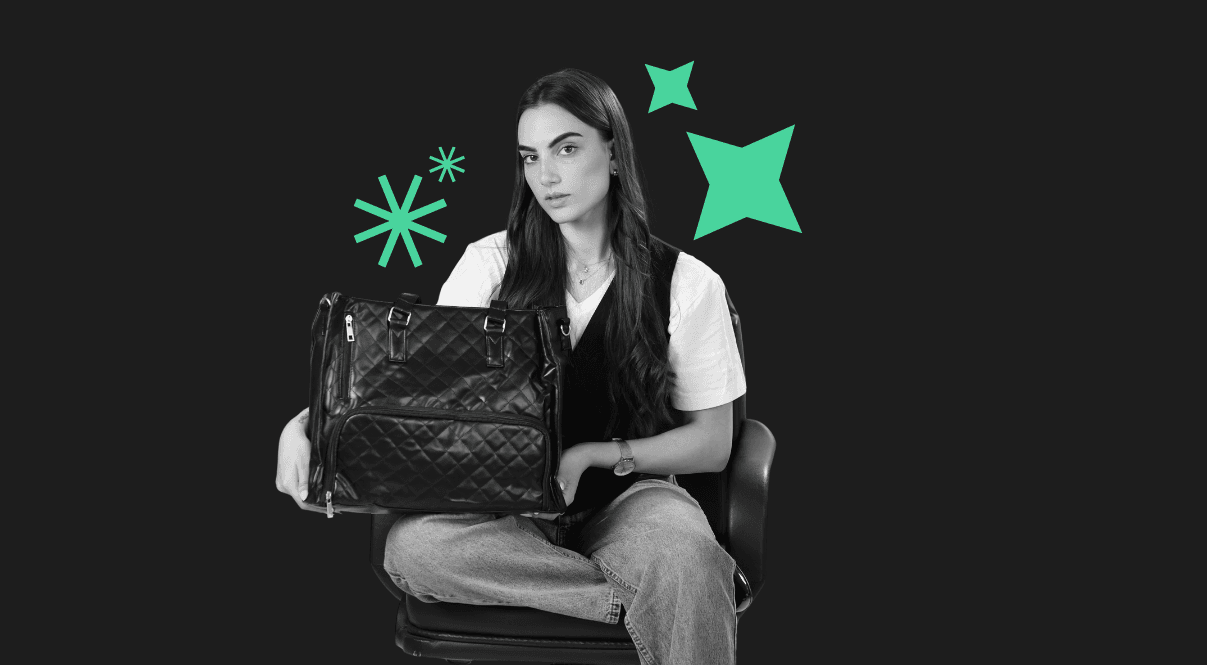
When Athena came to us looking for a UGC agency for beauty brands in the UAE, the brand's ads were stuck. Decent product, decent creative, flat returns. Sixty days later the account was running at 4.2 ROAS, organic engagement was up 170 percent, and the content library had grown by 120 pieces of UGC, model shots, and product video. None of that came from a single hero ad. It came from a system: tighter briefs, faster shoots, more creator rotations, and a creative test loop built to fail cheaply and double down on what worked. This is how we did it.
TL;DR
Athena, a UAE beauty brand, hit 4.2 ROAS and a 170 percent engagement lift across 60 days
We delivered 120 pieces of UGC, model content, and product video over the same window
The win was not one ad, it was a feedback loop between creators, paid media, and product shoots
This post breaks down the system we ran, the parts you can copy, and where a content partner saves you from rebuilding it from scratch
The brand brief
Athena is a beauty brand selling skincare and color cosmetics into the UAE market. Before our retainer started, the brand had three problems most beauty founders will recognize.
First, creative output was slow. The team was producing maybe 6 to 10 ad variants a month, mostly built around studio shots and re-edits of the same hero spots. That cadence is not enough to feed a Meta and TikTok account that needs at least 20 to 30 fresh angles every 30 days to stay efficient.
Second, the existing UGC was pretty but flat. Influencers were paid to "post a story", not to generate ad-ready hooks. Engagement was polite, conversion was poor.
Third, attribution was fuzzy. The brand could see total ROAS in Meta, but no one could tell which creators, which formats, or which hooks were actually pulling weight. Every creative decision was a guess.
We took a 60-day window. The brief from the founder was direct: prove that a content and creator partner can lift ROAS without raising spend, and stop the engagement bleed on organic. No vanity metrics. We wrote the goal as 4x ROAS and a meaningful engagement reset.
The system we built
A creator pool sized for testing, not posting
We pulled creators from the Hypebox network and built a 14-creator panel for Athena, weighted toward Arabic-fluent UAE talent and English-Arabic bilingual voices. The panel was not for one campaign. It was a content engine. Every two weeks, four creators rotated in for a fresh ad batch. Every six weeks, two were swapped out based on performance. This kept the creative pool wide enough to feed 30+ angles a month without the audience-fatigue you get from running the same three faces on every ad.
A weekly shoot cycle, not a monthly one
The team moved Athena from quarterly content drops to a weekly cadence. Mondays, the planning call: which hooks underperformed last week, which won, what shoots to schedule. Wednesday and Thursday, creator shoots and one studio block. Friday, edits and uploads. By Monday morning, fresh assets were live in Ads Manager. That single rhythm change is what turned 10 ads a month into 60.
A test grid, not a hunch
Every Monday, the creative brief mapped each new asset against three variables: hook type (problem-led, social-proof-led, transformation-led), format (UGC selfie, model studio, demo close-up), and CTA (price, urgency, authority). We did not run hero ads. We ran a grid. Within two weeks the data showed problem-led UGC selfies with a price CTA beating studio-style ads by 2.3x on click-through and 1.8x on purchase rate. Then we doubled down.
A product shoot that fed both organic and paid
Most beauty brands separate "content for ads" from "content for the feed". Athena did not. Every studio block was scoped to deliver three things at once: UGC-style ad cutdowns, premium grid posts, and a small bank of motion clips for Reels. One shoot day, three asset categories, no double-budgeting. That is how the same 120 pieces ended up serving paid, organic, and partnerships in the same 60-day window.
What worked, and what we would change
The thing that worked beyond expectations was the test grid. Tagging every asset against hook, format, and CTA, then reading the data on a weekly cycle, gave the brand a level of creative clarity it had not had before. It is also what scaled cleanly: once you know problem-led UGC at 22 AED CPM is your best lever, you stop rebuilding strategy from scratch every month.
The thing we underestimated was creator briefing density. Our first three creator briefs were too loose. Athena got two pieces of content back that needed a reshoot, which cost us 4 days. Once we shifted to a tighter 7-field creator brief structure (problem, target user, hero benefit, hook variant, demo beat, voice tone, CTA), the rework rate dropped to near zero.
If we ran the 60 days again, we would also push more spend into Reels in week two instead of week four. We waited for "ad-style Reels" data before scaling Reels distribution organically, when in retrospect the audience was already eating that format. That is a one-week delay we would not repeat.
The repeatable playbook for any beauty brand in the UAE
Any beauty brand in the UAE or wider GCC can run a version of this. The key is treating content production as a feedback loop, not a deliverable list.
Build a creator panel, not a creator booking. Stop hiring creators one campaign at a time. Build a panel of 8 to 14 creators you keep on rotation for at least 60 days. Mix Arabic, English, and bilingual voices. Mix ages and skin types. Brief them as a content team, not a series of one-offs.
Move to weekly shoots and weekly reads. Quarterly content drops are why your ROAS is flat. The brands winning in beauty content right now (Athena, Eleva Beauty in Lebanon, and a long list of UAE local brands) are running weekly creative cycles. The cadence is not optional, it is the lever.
Tag every asset against three variables before launch. Hook type, format, CTA. Every ad goes into the grid. After 14 days you can read what is winning, what is losing, and what to test next. Without this tagging, you are guessing every Monday morning.
Build one shoot day to feed three asset categories. If your studio shoot only produces grid posts, you are leaving money on the table. Brief every shoot to deliver UGC-style cutdowns, organic feed assets, and motion clips. The same 8 hour shoot day can feed paid, organic, and partnerships if you scope the brief that way.
Pair UGC with a fast performance team. UGC without a paid media operator who reads the data is a creative library, not a system. Plug your content into a performance marketing team that runs creative tests on a 14-day cycle, kills losers fast, and scales winners aggressively.
Set a 60-day milestone, not a 30-day or 12-month one. Sixty days is the sweet spot for a creative system to stabilize. Thirty days is too short to read data with confidence. Twelve months is too long to course-correct. Pick a 60-day window, set a ROAS and engagement target up front, and force the team to decide on day 60.
When a UGC agency for beauty brands in the UAE earns its keep
You can DIY most of this if you have a marketing manager, an in-house creator coordinator, a paid media operator, and a content editor. That is four people. For most beauty founders in the UAE, that team does not exist yet.
Where a content and creator partner like Hypebox earns its retainer is the orchestration: 1,500+ creators on tap so the panel rotation actually works, a shoot crew that can run weekly without burning out, and a paid media side that reads the test grid and acts on it. If you are running a beauty brand and your in-house team is stretched on email, retention, supply chain, and brand work, content is the area that quietly slips. That is when the math on a content-first agency starts to work, especially one that anchors content to performance instead of treating shoots as a deliverable.
FAQ
How long does it take a content and creator partner to show ROAS lift for a UAE beauty brand?
If the system is set up right (creator panel, weekly shoots, tagged test grid), most beauty brands see meaningful creative-driven ROAS movement inside 6 to 8 weeks. Athena hit 4.2 ROAS in the 60-day window. Anything faster than 6 weeks is usually a one-off win on a single hook, not a stable lift.
How many pieces of content does a UAE beauty brand actually need per month?
For a Meta plus TikTok account spending more than 30K AED a month, you want 30 to 60 fresh creative variants in market every month. Less than that and you fatigue your audience inside 21 days. Athena was at 60 pieces a month inside the test cycle, which is also the volume range we run for similar UAE beauty accounts.
Is UGC enough on its own for a beauty brand in Dubai?
No. UGC drives the top of the funnel and the click-through. Polished model and product shots still drive perception, brand search, and conversion at higher AOVs. The Athena system worked because it ran both, scoped from the same shoot day rather than from two separate budgets.
What does content creation for beauty brands Dubai look like at scale?
At scale you need three lanes running in parallel: a creator pipeline producing UGC weekly, a studio block producing model and product imagery monthly, and a paid media engine reading test data on 14-day cycles. Each lane has its own KPI. You do not let one lane carry the whole brand.
How is UGC for skincare UAE different from UGC for color cosmetics?
Skincare UGC tilts heavily toward problem-led hooks (texture, breakouts, dryness) and demo beats that show the application moment. Color cosmetics UGC leans into transformation hooks and shade-match content. Both work. They just require different creator types and different shooting setups, which is why the panel approach beats one-off bookings.
Want the same 60-day system for your brand?
See the full Athena case study for the unlisted detail (timeline, creative breakdown, ad spend ladder), or talk to our team if you want a content and creator partner to scope a 60-day reset for your beauty brand.
Grow 10x Faster
Continue Reading
Discover more insights and tips from our latest blog posts.


Sell 10x Faster
Get in Touch
We’d love to hear from you – reach out with any questions or feedback